 Andrew Hess (Hess Associates) – President
 (
email) Andrew Hess is a 1969 graduate of the University of Virginia (BS Aerospace Engineering) and the U. S. Navy Test Pilot School. Andy attended George Washington University working towards a Masters in Technology Management and has completed many Navy and DOD sponsored professional and acquisition management courses. Andy is world renowned for his work in fixed and rotary wing health monitoring and is recognized as the father of Naval Aviation propulsion diagnostics. Working for the Naval Air System Command and beginning with the A-7E Engine Monitoring System program of the early 70’s, Andy has been the leading advocate for health monitoring in the Naval Aviation. He has been actively involved in every NAVAIR aircraft program since the F-8, leading to the evolution and development of not just engine monitoring; but also aircraft structural life usage, comprehensive health monitoring and management capabilities for most all other aircraft subsystems and advance maintenance concepts like Condition Based Maintenance (CBM+). For the last 10 years of his government career, Andy worked leading and managing the vision, the development, and integration of the Prognostic and Health Management (PHM) system the AL support concept for the Joint Strike Fighter program. Andy’s consulting interests are now leading him and his clients to exploring the application of PHM capabilities and CBM+ related support concepts to many new industry sectors such as: industrial gas and steam turbines, ships and fast patrol boats, unmanned vehicles, wind energy, nuclear energy, ground vehicles, mining, and gas and oil. Serving on the Board of Directors, Andy helped establish and grow the new and very successful PHM Society professional organization and has just been named president of the society. Recently, Andy was named an Asset Management Fellow with the International Society of Engineering Asset Management and is a member of the new SAE HM-1 committee on Integrated Vehicle Health Management Systems.
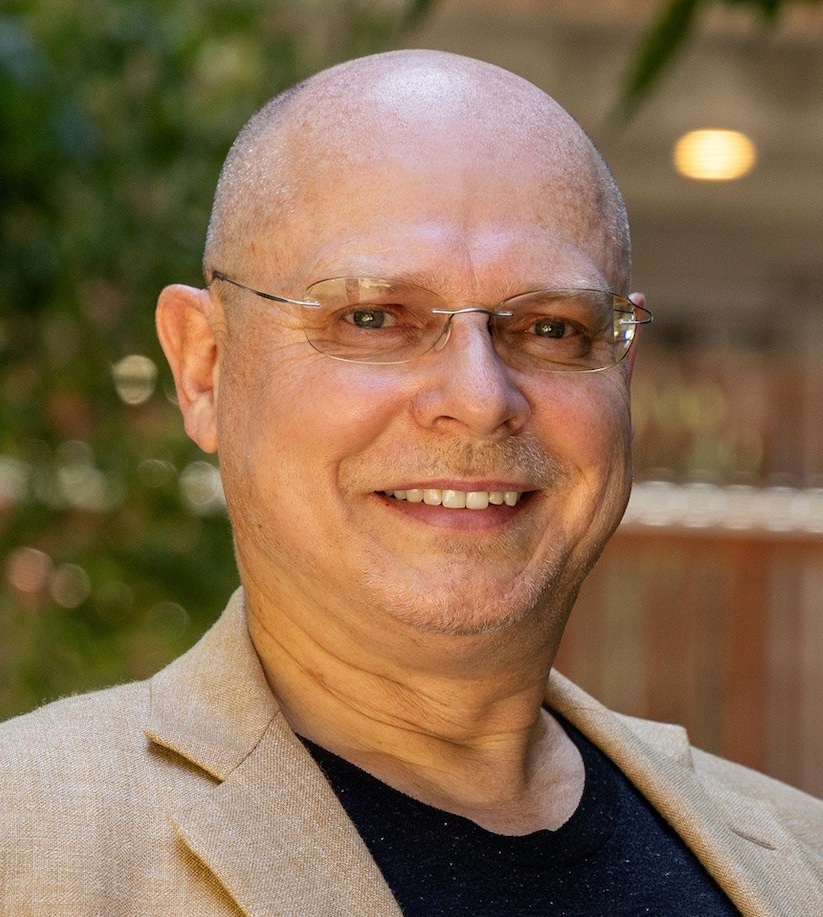 Wolfgang Fink (University of Arizona) – Vice President
 (
email) Prof. Dr. Wolfgang Fink is a German-American theoretical physicist and the inaugural Edward & Maria Keonjian Endowed Chair (em.) at the University of Arizona, having held joint appointments in the Departments of Electrical & Computer Engineering, Biomedical Engineering, Systems & Industrial Engineering, Aerospace & Mechanical Engineering, and Ophthalmology & Vision Science. He was a Senior Researcher at NASA’s Jet Propulsion Laboratory (2001-2009), a Visiting Associate in Physics at the California Institute of Technology (2001-2016), and held concurrent appointments as Visiting Research Associate Professor of Ophthalmology and Neurological Surgery at the University of Southern California (2005-2014). Dr. Fink is the founder and director of the Visual and Autonomous Exploration Systems Research Laboratory at Caltech and at the University of Arizona. He obtained a B.S. and M.S. degree in Physics and Physical Chemistry from the University of Göttingen in 1990 and 1993, and a Ph.D. “summa cum laude” in Theoretical Physics from the University of Tübingen in 1997. Dr. Fink is a LFNAI, FARVO, LFSPIE, FPHMS, FAIMBE, and a SM IEEE, as well as the 2015 daVinci Fellow and 2017 ACABI Fellow of the University of Arizona. He is the VP of the PHM Society, and holds a Commercial Pilots License for Rotorcraft. Pursuing a trans-disciplinary systems engineering approach in “smart service systems” in general, Dr. Fink has focused his research and technology development efforts on biomedical engineering for healthcare (especially ophthalmology and vision care), human-computer interfaces (artificial vision implants), smart platforms for mobile- and tele-health, autonomous systems (robotic space exploration), and computer-optimized design. Dr. Fink has over 270 publications (incl. journal, book, and conference contributions), 6 NASA Patent Awards, as well as 32 U.S. and foreign patents awarded to date in the areas of autonomous systems, biomedical devices, neural stimulation, MEMS fabrication, data fusion and analysis, and multi-dimensional optimization. Among numerous awards Dr. Fink was named recipient of the NASA Space Flight Awareness (SFA) Launch Honoree Award in 2002, co-recipient of the 2009 R&D Magazine’s R&D 100 and R&D 100 Editors’ Choice Award both for the DOE-funded Artificial Retina Project, co-recipient of the 2009 NASA Board Award for his pioneering work on a disruptive autonomous space exploration paradigm, co-winner of the $200,000 DOE/NREL-sponsored E-ROBOT Prize in 2021, and recipient of the 2023 SPIE Meinel Technology Achievement Award.
 Karl Reichard (Penn State University) – Treasurer
 (
email) Dr. Karl Reichard is a Research Associate at the Applied Research Laboratory at The Pennsylvania State University and Deputy Department Head of the Advanced Sensors and Controls Department in the Multisensor Processing Division. He has more than 15 years of experience in the development of advanced sensors, measurement systems, and signal processing algorithms. An Assistant Professor of Acoustics at Penn State and Head of the Condition-Based Maintenance Department at the University’s Applied Research Laboratory, Dr. Reichard leads advanced research and development efforts in embedded systems, electro-optics, intelligent acoustic and vibration sensors, and signal processing and classification algorithms for active noise and vibration control, manufacturing machinery monitoring, and surveillance systems. Prior to joining Penn State ARL in 1991, he was employed by the U.S. Army Aberdeen Proving Grounds and Virginia Polytechnic Institute and State University, his alma mater. Dr. Reichard has published more than 25 papers in refereed journals, conference publications, and technical reports. Dr. Reichard serves as Associate Editor of the International Journal on Prognostics and Health Management.
 Peter Sandborn (University of Maryland) – Secretary
 (
email) Peter Sandborn is a Professor in the CALCE Electronic Products and Systems Center at the University of Maryland. Dr. Sandborn’s group develops life-cycle cost models and business case support for long field life systems. This work includes: obsolescence forecasting algorithms, strategic design refresh planning, lifetime buy quantity optimization, and return on investment models for maintenance planning (including the application of PHM to systems). Dr. Sandborn is an Associate Editor of the IEEE Transactions on Electronics Packaging Manufacturing, the North American Editor of the International Journal of Performability Engineering, and on the Board of Directors of the International PHM Society. He has authored over 150 technical publications and several books on electronic packaging and electronic systems cost analysis; and was the winner of the 2004 SOLE Proceedings Award; the 2006 Eugene L. Grant Award for best paper in the journal Engineering Economics; and the Best Paper Award at the IEEE PHM Conference in 2011. He has a B.S. degree in engineering physics from the University of Colorado, Boulder, in 1982, and the M.S. degree in electrical science and Ph.D. degree in electrical engineering, both from the University of Michigan, Ann Arbor, in 1983 and 1987, respectively.